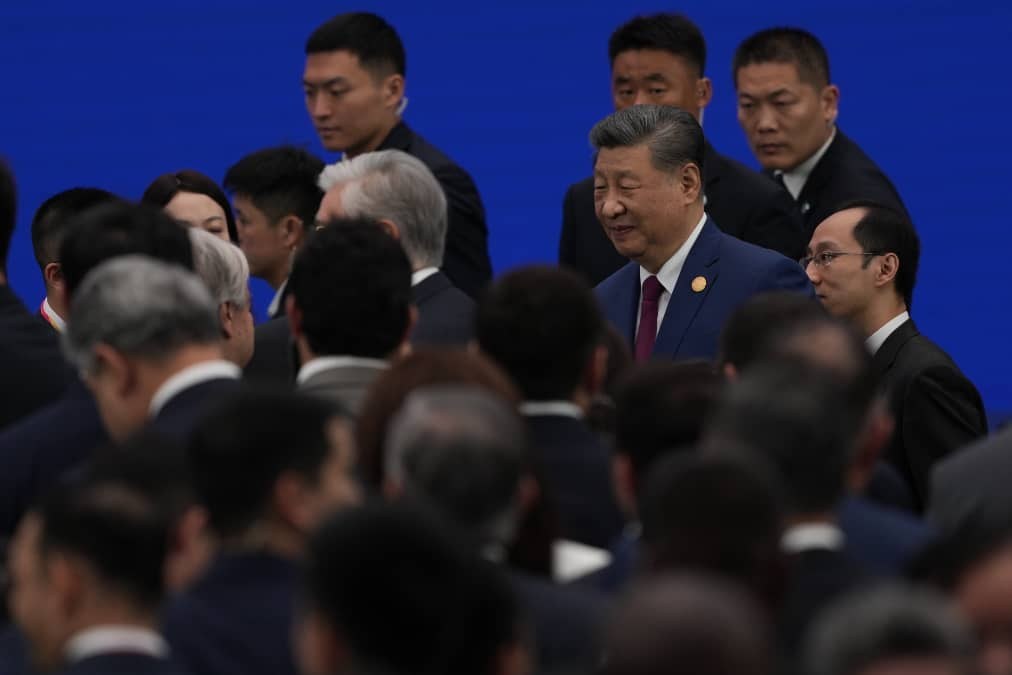
Chinese President Xi Jinping has kicked off his first U.S. state visit in more than a decade with a confidence boost — a run of chip and model launches that could give Washington pause before tightening tech export controls further.
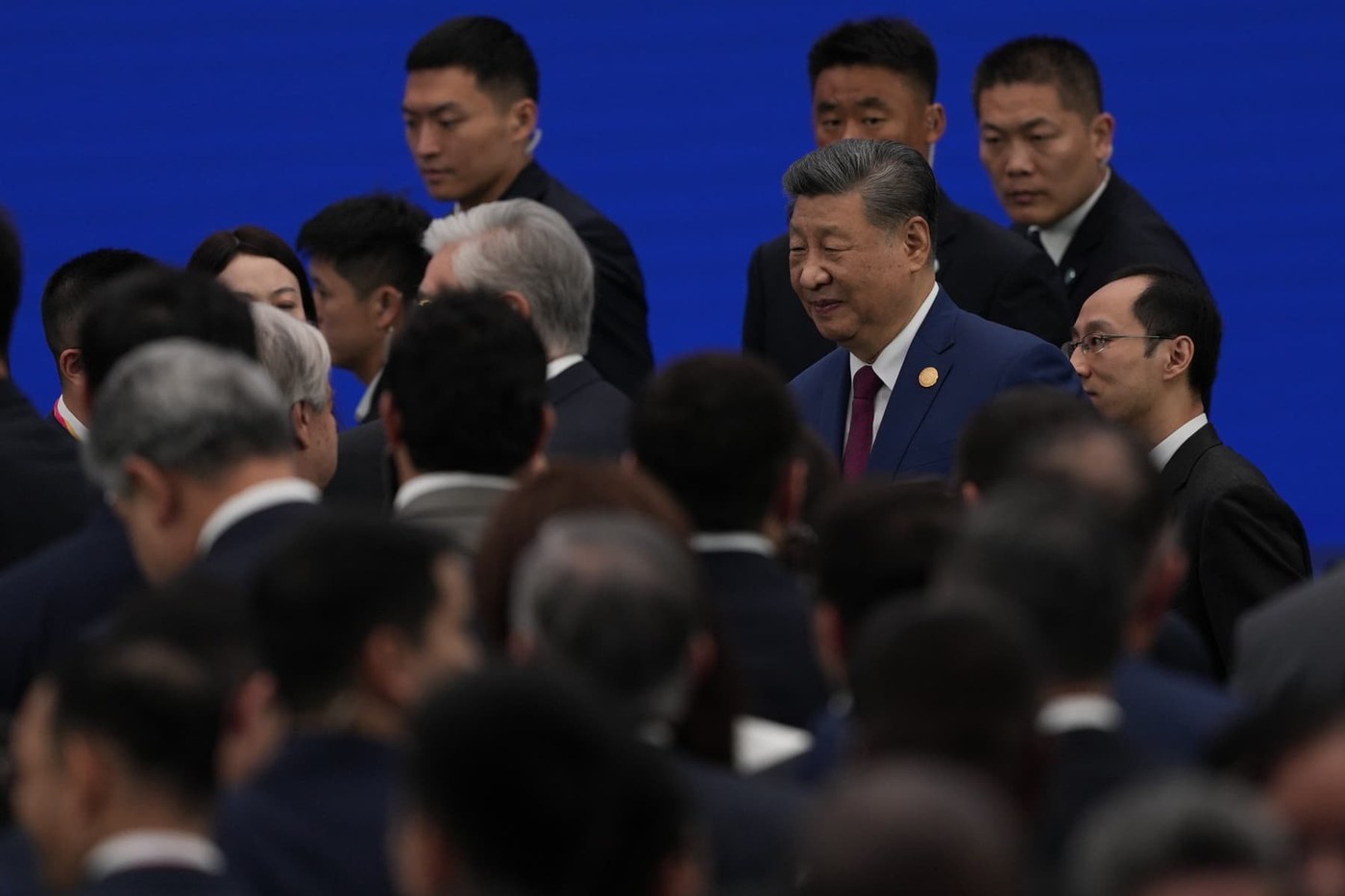
Recent releases of new chip and AI models from national champions, including Huawei Technologies and Alibaba Group, have sharpened Beijing's case that a key lever used by Washington against Chinese AI has limits: its technology restrictions can slow China's ambitions but not stop them.
"For Xi, the leverage is not 'we have caught up with you' — it's 'you can't simply technologically choke us off,'" said Lizzi Lee, a fellow at the Asia Society Policy Institute.
Washington has for years restricted China's access to Nvidia's most advanced AI chips and the equipment to make them, betting that starving computing power would keep Chinese AI a generation behind. Silicon Valley executives have also accused Chinese AI companies of using "distillation" — training models on the output of more advanced U.S. systems, a claim Beijing rejects.
Against that backdrop, Huawei brought the release of its next AI chip forward by three quarters. Alibaba unveiled what it called the country's most powerful AI processor. DeepSeek, the startup whose low-cost model rattled global markets last year, reportedly lined up the largest known cluster of Huawei chips built to date.
"Xi's confidence level in terms of how great China is in terms of technology and innovation is at a historic high," said George Chen, partner and chair of digital practice at Washington-based policy consultancy The Asia Group. "You need to have cards when you sit at a table, and Xi has many cards," Chen said, calling the timing a "deliberate" confidence boost ahead of the leaders' summit.
Xi's visit to the White House — his first in 11 years — follows Trump's state visit to Beijing in May. The timing of the tech giants' flagship releases, days ahead of the summit, has revived debate over whether China's AI industry has hit an inflection point.
Chris Miller, a Tufts University professor and author of "Chip War", pointed out that China has a history of announcing new projects around meetings with senior policymakers as part of an effort to show Chinese firms are "catching up," he said.
But U.S. models remain ahead, he said, on technical benchmarks and profitability. American firms like Anthropic and OpenAI make 50 to 100 times the revenue of comparable Chinese firms, he said.
Slowed but not stopped
At its annual Huawei Connect conference last week, Huawei said its Ascent 960DT will ship in the first quarter of 2027, three quarters ahead of its original schedule. At the Apsara Conference in Hangzhou on Tuesday, Alibaba's chip unit unveiled the Zhenwu V900 chip, which triples the performance of its predecessor and will go on sale in early 2027.
"There does seem to be genuine acceleration in its production timeline," Sigrid Wang, analyst at China-focused Hutong Research, said of Huawei's chip. The clustering "gives Xi more examples to point to when arguing that U.S. restrictions can slow China's technological development but have not prevented Chinese companies from finding alternative paths forward," Wang said.
Chinese firms have sought to make up for weaker individual chips by linking thousands of them into large clusters over faster connections.
But the approach has limits. Huawei's latest SuperPoD computing architecture links far fewer processors than originally planned, and each chip still delivers roughly half the compute of Nvidia's. Chairman Eric Xu acknowledged that Huawei may not be able to make enough chips to meet domestic demand, and that Chinese AI developers may not be advanced enough to experience rogue safety risks.
"Chinese chip companies haven't made any groundbreaking progress in the past few years," said Xiaomeng Lu, a director at Eurasia Group. "The fundamental competitive landscape hasn't changed."
Chinese firms remain substantially short of the chips needed to train and deploy advanced models, and rely heavily on smuggling chips or gaining access to data centers outside China, Miller said. "China is still highly dependent on the U.S. for advanced chips."
Curbs off the table
As Trump hosts Xi for a multi-day state visit, neither side appears ready to put chip export controls on the table.
Treasury Secretary Scott Bessent and U.S. Trade Representative Jamieson Greer met Vice Premier He Lifeng in New York over the weekend and set up a formal AI channel for incident warnings. But Greer said explicitly that export controls on advanced chips and chipmaking equipment were not on the agenda.
"It's striking to see the chip export control issue not come up at these summits given how often Xi brought them up with Biden," Chan said. The Chinese president has also not invited a delegation of business executives and tech leaders to the summit, according to media reports.
Beijing's immediate priorities may lie elsewhere. Lyle Morris, a senior fellow at the Asia Society Policy Institute, said Xi is likely to press Trump to align closer on the Taiwan issue, and in return, the Chinese leader may offer help on Iran, including restoring free movement of shipping in the Strait of Hormuz.
"The recalibration of U.S.-China tech relations takes a lot of substantial work," Lee said. "Not a summit deliverable, I am afraid — at least not this time."