POWER POINT
Oil flows through Hormuz are rising, more ships are safely getting through the Strait, and oil prices seem to be coming down — at least for now. Goldman Sachs wrote Wednesday that Persian Gulf exports have "recovered to their 2025 average after doubling in September." The firm expects Brent crude prices to "moderate" to $85 per barrel by year's end. That's good news on oil, and maybe good news for both the United States and China.
My take → I know the term "reopen the Strait of Hormuz" is popular, but I just can't bring myself to say it. Hormuz is an international waterway, and no one country can "close" it. Yes, Iran — or the Houthis in Yemen — can threaten ships in Hormuz or near the Red Sea, making it more dangerous to pass through. But no country has the power to "open" or "close" a public, international waterway. I get that I'm the outlier in saying that — and I wouldn't have it any other way.
The not-so-good news involves natural gas and Europe. Despite the improvement around Iran and oil, it could still be a long, expensive winter for our friends in Germany and much of Europe.
For five years, I've been highlighting a few of the continent's major energy challenges: how more and more U.K. families have had to choose between heating and eating — aka "energy poverty"; how rising electricity costs are hurting industrial companies; and how American liquefied natural gas has become a type of "Marshall Plan for energy," helping make sure the lights can stay on across Europe.
One big worry I highlighted in my reporting was that parts of Europe might face critical natural-gas shortfalls at times during the year. Thankfully, those worries proved wrong. The worst-case scenarios did not happen, largely due to the weather. Much of Europe has enjoyed a multi-year run of fairly benign weather: not too hot, not too cold. That enabled countries to preserve precious natural-gas storage.
This summer, Western Europe broke the 2003 record for its hottest summer on record. And while much of the continent does not use air conditioning at the same levels as the U.S. or some other countries, cooling does exist — and it's getting more and more common. So when temperatures climb, companies and consumers want to crank it. A/C is great, but it's a huge power drain. As power demand rose, natural-gas inventories were drawn down.
The Swiss Federal Office of Energy tracks natural-gas storage levels against the five-year average (for more, click here). The chart below highlights that the European Union's storage level is at its lowest point in those five years.
As you can see HERE, Germany is in slightly worse shape. France, not shown, is as well.
Despite lower storage levels and higher prices, European leaders remain seemingly unbothered. A group representing the coalition writes that, despite "lower storage levels compared to historical levels, the Commission and EU countries reconfirmed that EU gas supply remains stable."
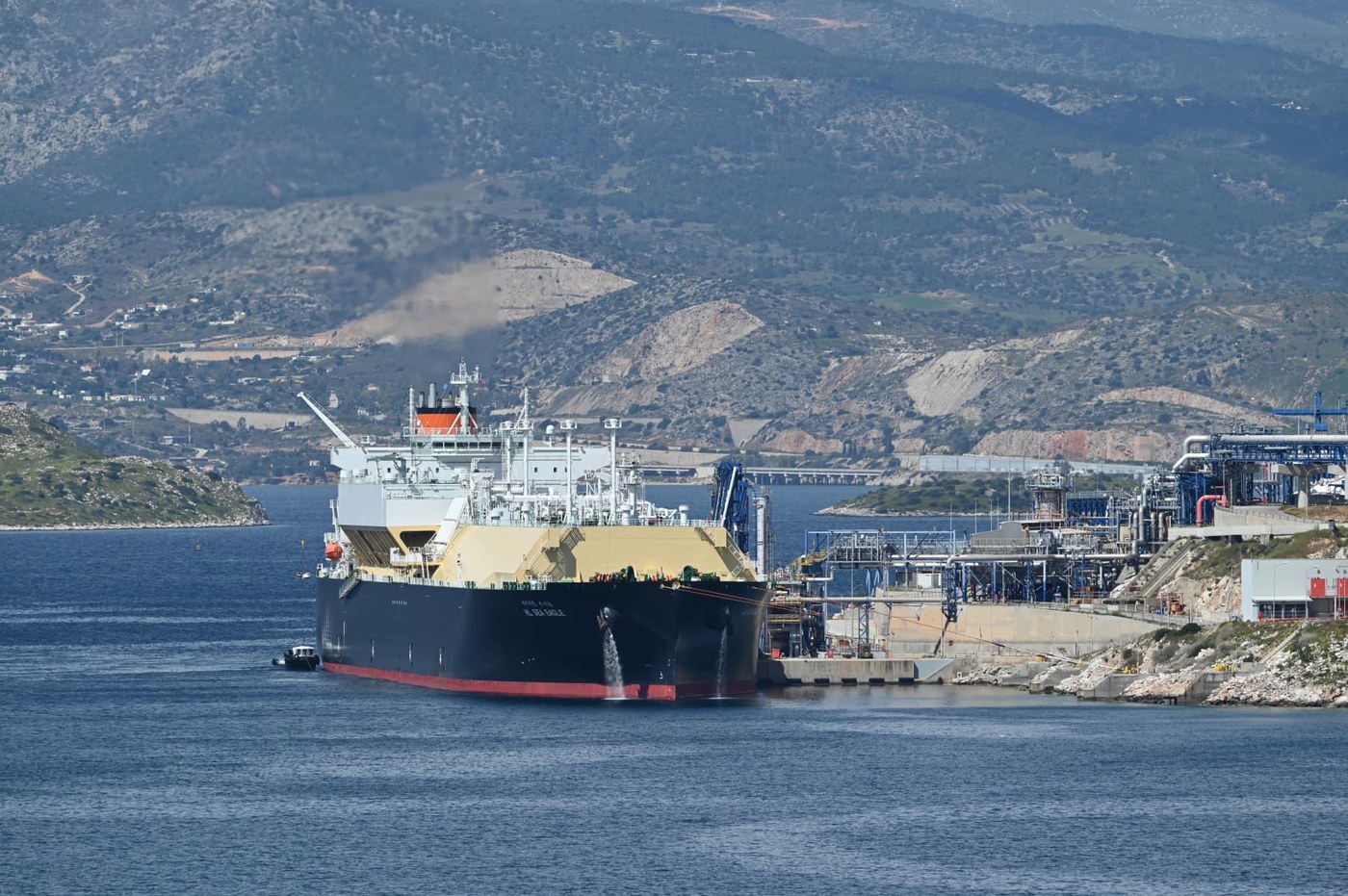
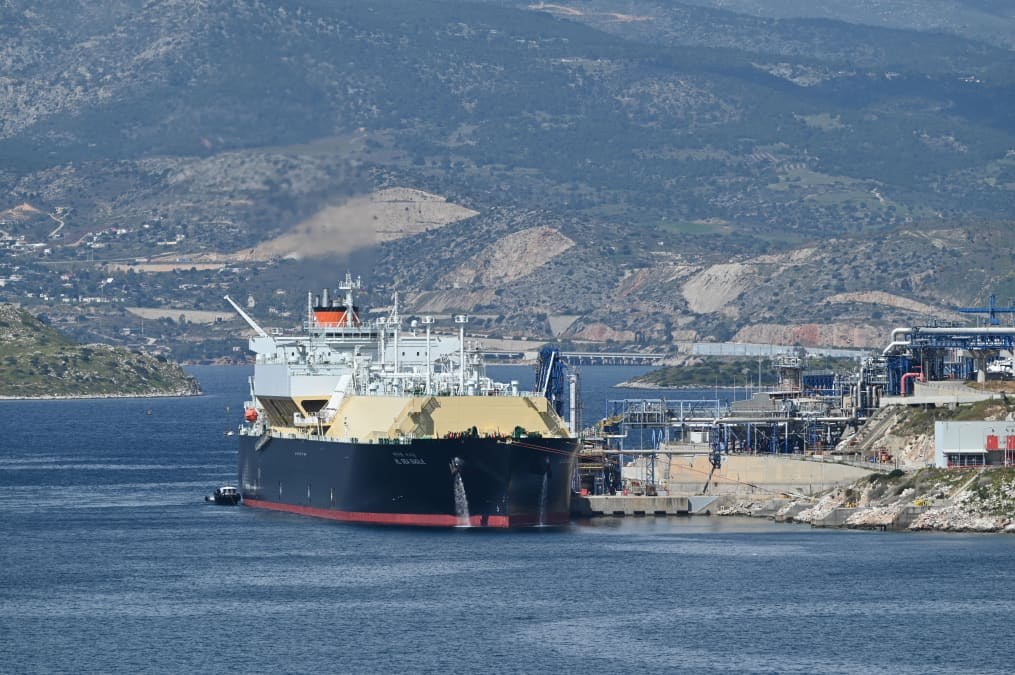
One: Natural-gas storage remains "stable" only because of American exports. U.S. companies are saving Europe from an even more dire energy scenario. This is not hyperbole. The natural gas liquefied and loaded onto ships in Texas, Louisiana, and other ports is the difference between Europe having "stable" supplies and Europe struggling to meet demand. The sabotage of Qatari gas has made Europe even more reliant on LNG from the U.S. and — wait for it — Russia.
It's hard to believe, but Europe is still buying billions of dollars' worth of natural gas from Russia, albeit via ships and not the ill-fated Nord Stream pipeline. My producer Harriet Taylor and I stood incredulously and watched cargoes of Putin's gas steam into the Port of Rotterdam. Many believe because Nord Stream was blown up that Moscow isn't making any money off Europe's energy needs. Think again.
European leaders still argue they will cut out Russian LNG by January 1 and end all contracts to buy Russian gas by late next year. Color me skeptical. Given that people tend to get angry when they don't have electricity or heat, I would venture to say that Russia will be selling plenty of gas into Europe well beyond these feel-good headlines. Time will tell.
Two: It's not just about supply; it's also about price. On the ICE exchange, prices for October futures on European-traded natural gas are more than double those for February. While many power companies have already locked in purchase costs, anyone needing to buy gas on the open market is going to face the double shock of higher gas prices and higher shipping costs to get the LNG. For spot cargoes, Europe has to compete with buyers in Asia, with both sides ready to pay whatever they have to in order to keep the lights and heat on this winter.
If you're looking for a silver lining, it's that prices have come down in recent days, buoyed by hopes of a real, longer-lasting peace deal that allows for risk-free shipping through Hormuz. Peace in the Middle East would be the best outcome on many levels.
Beyond that, it would also be hugely helpful if Europe had another relatively mild winter, reducing demand for heat and natural gas. This would keep storage levels sufficient and allow power companies and countries to get a better head start on refilling natural-gas storage for next year.
Much of that LNG supply is going to come from the United States. We have more natural gas than we can export. If you're looking to invest around this theme, two obvious names are exporters Cheniere Energy (LNG) and Venture Global (VG). Less obvious: the biggest holders of U.S. LNG capacity are based in France and the U.K. They are TotalEnergies (TTE) and Shell (SHEL).
TotalEnergies CEO Patrick Pouyanné — arguably the most important CEO in global oil and gas — spoke with us this week about Europe's energy challenges, prices, and more in a Power Insider interview.
ACTIONABLE INSIDER
Speaking of TotalEnergies, it's time to buy that stock — and BP, too. So says the team at HSBC.
HSBC is upgrading both BP (BP) and TotalEnergies to buy. Higher natural gas prices play a part in the call. The firm raised its TTM European natural gas price forecast — what we showed you above — by 34% for the rest of this year and 40% for next year, while also slightly raising its 2028 outlook. Analyst Kim Fustier also sees "substantial upgrades" across both firms' oil and refining-margin outlooks, as well as huge cash generation and stock buybacks.
BP and TotalEnergies are not the only energy stocks the firm loves. It maintains its buy ratings on Shell (SHEL), Spain's Repsol (REP-DE), and Chevron (CVX). Fustier sees about 20% upside for her Buy-rated stocks.
I think it's a fascinating call, in part because Fustier acknowledges that the situation around Hormuz may not improve rapidly anytime soon. HSBC's base case is that the situation is prone to "repeated breakdowns" and "continued uncertainty," though it does see shipping volumes continuing to improve.
HSBC isn't the only firm getting hotter on BP these days.
JPMorgan also just upgraded BP to overweight. In a note titled "Road to Redemption," the firm says a return to the "value of simplification" and "renewed long-term growth" look good for BP investors. While the firm notes that BP's recent history has been beset by operational and strategic issues, it sees the company getting things right under new-ish CEO Meg O'Neill.
Insider → Also, get to know some new geography. JPMorgan highlights how BP's discovery in Bumerangue may be a big deal. Bumerangue is a big Brazilian offshore oil block. It's BP's largest discovery in 25 years, according to Wood Mackenzie. I had never heard of it before reading this note.
I agree that BP is a company to watch closely over the next 12-24 months. The company made a hard pivot away from its core competency - oil and gas. The company once known as British Petroleum even went so far as to make an ill-fated rebranding effort to be known as "beyond petroleum." That didn't last long. While the company remains a player in solar and battery technologies and has a joint venture in wind power, it is refocusing back on what originally made it one of the world's biggest companies.
BP investors are also desperate for some consistency in leadership, and should have found that in new-ish CEO Meg O'Neill. O'Neill is a super smart veteran of the industry. She came to BP from Woodside Petroleum and before that was the CFO of ExxonMobil. She knows the industry and how to compete on a global scale. The big question any BP investor should be asking is: is it too late to really effect the kind of change investors are looking for? My take is that it is not, but BP will have to act fast. Oil itself may take eons to create, but the industry never stops. O'Neill needs her foot on the gas pedal.
TAKE A LOOK
This week's Take A Look is a conversation with energy executive David Crane. He's currently the CEO of Generate Capital, and previously served as CEO of NRG and as an energy official in the Biden White House. It was great to sit down with David for a longer conversation about power, energy, nuclear, and why he believes the stock market is making a mistake with some energy-related names.
INSIDE LINE
This week's Inside Line is with TerraFlow Energy CEO Jon Parrella. TerraFlow is building out battery and storage technologies and just signed an agreement around data centers.
RANDOM, BUT INTERESTING
You know things are getting hot when the world of energy partners up with NBA basketball! That's exactly what just happened as Bloom Energy strikes a multiyear deal to place its name on the Philadelphia 76ers' jersey. With the arrival of superstar LeBron James to Philly this year, we'll see if this deal is a… slam dunk.
THE GRID
-Russia launches massive strikes on Ukraine's energy grid, forcing power cuts ahead of winter
-South Korean President Lee pushes back on Alaska LNG project after Trump touts Seoul's participation
-U.S. tells France and Germany to release diesel stocks or face US export ban (Reuters)
Catch up with more on energy including interviews and video content from CNBC and Power Insider.
Read the last issue of Power Insider here.