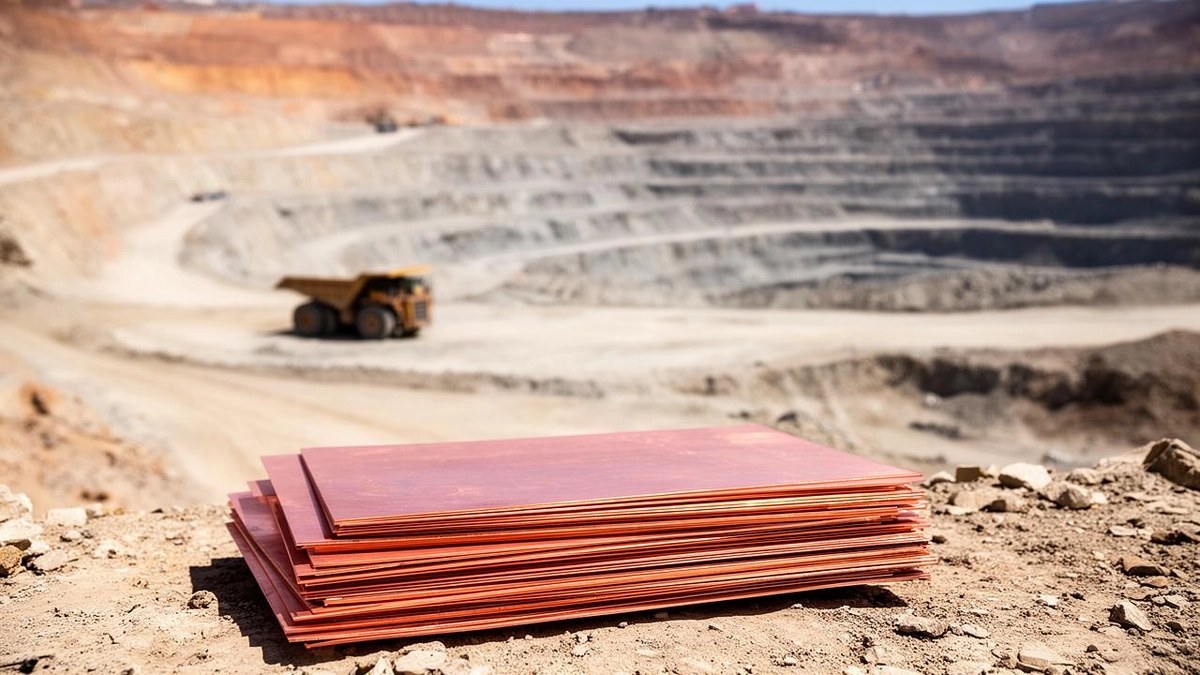
The world's largest copper mine, Escondida, is on the brink of a strike. The supervisors and professional staff union at BHP's Chilean operation said Tuesday that labor and management failed to reach a new collective contract agreement under government mediation, with the union planning to launch a strike at 8 a.m. local time Wednesday.
However, the strike was averted at the last moment. According to two people familiar with the matter, both sides reached a preliminary agreement before the 8 a.m. Wednesday strike deadline. The agreement text has been drafted but still requires ratification by union members within hours; only after approval will the preliminary deal formally take effect.
The union involved has more than 1,000 members, representing roughly a quarter of Escondida's direct employees. While a last-minute deal remained possible before a formal work stoppage, the union said mediation talks had collapsed and placed blame on the company.
The labor dispute comes as copper prices hover near record highs and global mine supply faces frequent disruptions. Copper futures have surged approximately 38% over the past year, with miners demanding a larger share of corporate profits while producers seek to contain rising labor and operating costs.
Negotiation Flashpoints: Wages, Bonuses, and Biometric Data
The Escondida supervisors and staff union said its final proposal to the company incorporated roughly 90% of the company's offers while retaining several core demands, including higher wages, a monthly production bonus, and adjustments to the employee performance evaluation system.
Union president Alexis Barrera said BHP's proposed signing bonus of approximately $25,500 per employee, while part of an overall benefits package, remains "below market levels" given copper price gains and company profitability.
The two sides disagree on how to characterize the same offer: the company includes a low-interest loan in its calculation, arriving at roughly 28 million Chilean pesos (approximately $28,700) per person; the union counts only about 25 million pesos (approximately $25,600) as the signing bonus.
The dispute also involves existing benefits and employee biometric data. The union accuses the company of requiring workers to give up certain "key benefits" and consent to providing private biometric data to third parties.
The union said BHP did not respond further after it submitted its final proposal and ended the mediation process. Escondida had not responded to requests for comment as of reporting time.
BHP previously stated that its latest proposal would continue to ensure Escondida supervisors and professional staff remain among the highest-paid groups for comparable positions in Chile's mining sector. The company's final offer remained valid until midnight local time Tuesday.
Not all mine employees are involved in these negotiations—only the supervisors and professional staff union—so the ultimate impact on production depends on whether the company can maintain critical positions and production processes. Nevertheless, a work stoppage by more than 1,000 employees could still disrupt mine operations.
Chile's Copper Supply Risks Compound
Located in northern Chile, Escondida is the world's largest copper-producing mine, and its operational status has long been viewed as a critical variable in global copper supply. The market is highly sensitive to strike risk because global copper supply currently lacks sufficient buffer. Mining companies have faced declining ore grades, extended construction timelines, weather disruptions, and operational incidents in recent years, while investments in data centers, grid expansion, and energy infrastructure are increasing medium- to long-term copper demand.
According to data from the Chilean Copper Commission (Cochilco), Escondida produced 1.345 million tonnes of copper in 2025—its highest level since 2007—and for the first time surpassed the combined output of all seven divisions of Chile's state-owned Codelco. Chile produced approximately 5.41 million tonnes of copper that year, accounting for more than 20% of global supply. On copper prices, London Metal Exchange (LME) copper rose to around $14,700 per tonne on October 13, not far from the record high set in September.
As the world's largest copper producer, Chile has seen a series of other supply disruptions recently. Two unions at Antofagasta's Centinela mine have been on strike for about a week and re-entered voluntary mediation on Tuesday.
The Centinela unions said the strike has reduced mine haulage vehicle numbers by roughly half—regular vehicles dropped from 67 to 25, while autonomous haul trucks fell from 21 to 17. Their members account for more than 50% of critical mining equipment operators and over 60% of mine equipment maintenance personnel. The unions estimate that if the stoppage continues, November production could fall by as much as half. The company previously said striking employees represent only about 22% of the total workforce and that production would not be affected.
If the preliminary agreement fails to win ratification from union members, Escondida would face labor action simultaneously with Centinela, adding further uncertainty to Chile's copper supply.
Japanese Companies Hold 12.5% Stake; Chile Accounts for Over Half of Japan's Copper Ore Imports
Japanese capital holds a direct seat in Escondida's shareholder structure: BHP owns 57.5% and operates the mine, Rio Tinto holds 30%, and JECO—jointly funded by Mitsubishi Corporation and other Japanese companies—holds 12.5%.
For Japan's copper smelting industry, supply from this mine carries particular significance. Japan's Ministry of Finance trade statistics show that copper ore imports fell 5% year-on-year in the first half of 2026, the lowest since 2011; however, imports from Chile—the largest source country—increased for the fourth consecutive year, accounting for more than half of Japan's total copper ore imports. The raw material supply for Japanese smelters depends considerably on the operational stability of Chilean mines.
High Copper Prices Reshape Labor Negotiation Dynamics
The recent surge in copper prices is changing the environment for mining labor negotiations. As corporate revenues and profits improve, unions have greater bargaining leverage to demand higher bonuses and benefits; mining companies, meanwhile, worry that significantly raising fixed compensation costs during periods of high copper prices will increase long-term operational pressure if commodity prices retreat.
Escondida's negotiations have been ongoing for several weeks. In late September, the supervisors union rejected the company's previous contract proposal, paving the way for a strike. After entering the final mediation phase, BHP raised its offer but still failed to bridge differences over wages, bonuses, and benefit arrangements.
The tense atmosphere of this round of negotiations has been intertwined with a September accident. On September 23, a worker died during maintenance operations, prompting Chile's mining regulator Sernageomin to order a shutdown of the affected area and launch an investigation. Following the incident, BHP proposed suspending contract negotiations, which the union rejected. This round of negotiations covers the 2026–2028 collective contract; the current contract expired on September 30.
The last major shutdown occurred in 2017, when the mine's main union struck for 43 days—the longest strike in Chile's private mining history. The company estimated losses of approximately $1 billion, and the stoppage pushed up international copper prices at the time.
With limited expansion of global copper mine projects, whether the world's largest copper mine can maintain normal operations will become one of the most closely watched supply variables in the current copper market.